
Floreana Giant Tortoise
No Galapagos creature captures the imagination quite like the giant Galapagos Tortoise. These gentle giants are true icons of the Galapagos Islands, and a great example of species evolution.
There are 15 different giant tortoise species at the Galapagos, 3 of which had been considered extinct until recently.
This blog tells the extraordinary story of the giant tortoise that came back from the dead after 180+ years.
In February 2026, Floreana Island was repopulated with 186 Floreana giant tortoises. This feat celebrates one of the greatest conservation stories ever told.
Keep reading to learn the full details of how the Floreana Giant Tortoise made such an unlikely comeback, as well as what the future now holds for this species.


SECURE YOUR GALAPAGOS TRAVEL
Get a FREE personalised quote todayExtinction of the Floreana Giant Tortoise
Floreana Island was once home to a large, healthy population of giant Galapagos tortoises.
Back in the early 1800’s, Commodore John Downes, a whaling captain, recorded that Floreana tortoises (Chelonoidis niger niger) "spread in all directions over the plains and low grounds near the sea."
Yet, just 30-40 years later, the Floreana giant tortoise was extinct.
So, what went so horribly wrong?
Floreana is one of the few islands with fresh water, making it a popular stop for passing whaling ships back in the day. In fact, it was such a well-known port of call that a sailor’s post box was set up there in an old whisky barrel at Post Office Bay.
Ships that stopped off at Floreana took advantage to stock up on food and water before sailing on. Unfortunately for giant tortoises, they were the perfect food source; easy to catch, and possible to keep alive on board for long periods until the meat or oil was required.
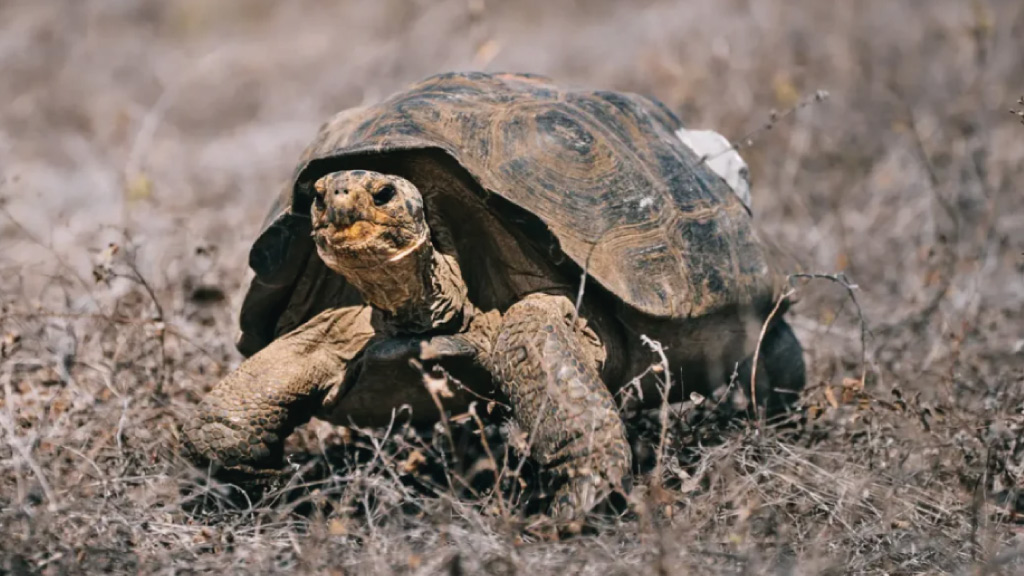
So, the 18th century whalers quickly hunted out all of the Floreana giant tortoises, with the last individual believed to have died in the 1840s.
Even by the time Charles Darwin set foot on Floreana, back in 1835, the island’s tortoise population was close to being wiped-out. The HMS Beagle’s captain, Robert Fitzroy, reported that “the quantity of tortoise shells lying about the ground shows what havoc has been made among these helpless animals.”
Adding to the problem, humans also introduced invasive species to Floreana Island. Rats, cats, cows, pigs, dogs, donkeys, and goats quickly ensured that any remaining tortoises were fast outcompeted for food or their young were predated.
So, it’s an all too familiar tale, species extinction due to human activity.

Descendants of the Floreana Giant Tortoise
So, since the 1840’s, the Floreana giant tortoise has been widely believed to be extinct.
It wasn’t until 2002, when geneticist Gisella Caccone published a research paper, that fresh hope saw the light of day. Caccone stated
that “Tortoises were occasionally stashed on various islands for safekeeping and even tossed overboard in large numbers in near shore areas to lighten cargo during flight or battle.” That is to say, whalers would sometimes move tortoises to other islands as a future food cache.
Could it be possible that a Floreana tortoise had survived all this time, only on a different island?

Possible clues pointed towards the giant tortoise colony at Wolf volcano on Isabela Island. Here, rather unusually, tortoises are found with different-shaped shells within the same population. While the majority of these tortoises have dome-shaped shells, there are others with saddleback shaped shells, which is more typical of the shell shape of the original Floreana tortoise.
So, Caccone and her team set about studying the DNA of the Wolf saddlebacks in search of a genetic link to the Floreana giant tortoise.
By 2008, they had successfully identified 86 animals with DNA close to that of the original Floreana tortoise. Although there was no 100% pure match, it could be said with confidence that the Floreana lineage had, in fact, survived all of these years.
By an incredible quirk of fate, the very same whaler who had hunted the tortoises to extinction on Floreana Island had also indirectly ensured their survival on Isabela.
Floreana Giant Tortoise Breeding Program
In response to this remarkable discovery, the Galapagos National Park Directorate initiated a project to repopulate Floreana Island with giant tortoises.
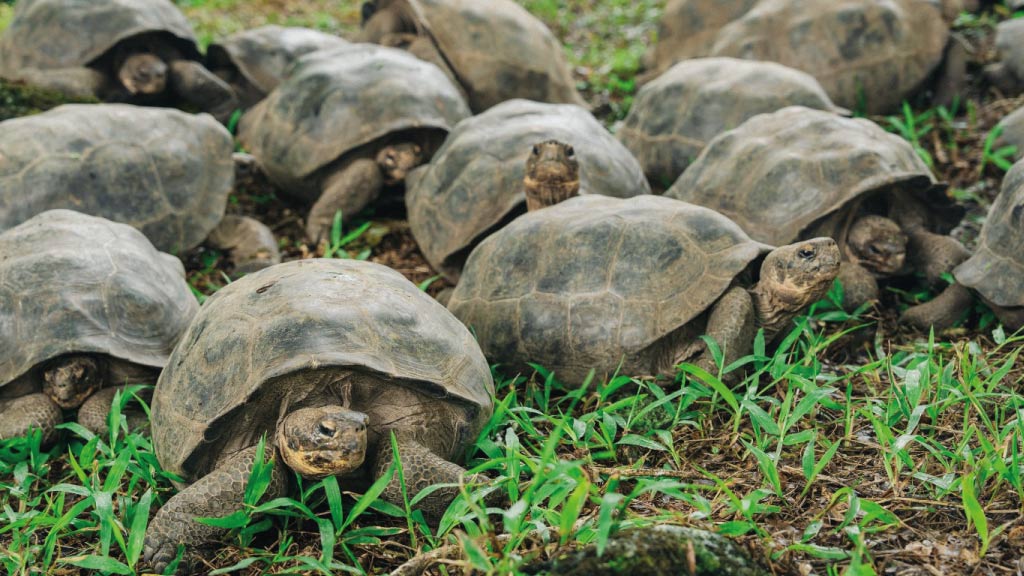
This began in 2015 when park rangers gathered up 23 individual Wolf Volcano tortoises with saddleback shells. They were transported to Puerto Ayora on Santa Cruz Island for further study.
DNA analysis confirmed their genetic lineage to the Floreana giant tortoise. So, these 9 males and 14 females became the 23 founding individuals for the breeding of a new population that could be returned to Floreana.
Ideally, a breeding project will use genetically pure animals to reproduce. In this case, it was simply not possible as no purebred individuals had been found. So, the project went ahead with the hybrid floreana tortoises, ensuring carefully planned mating between particular combinations of males and females and routine assessment of the genetic makeup of the offspring to increase the representation of the particular genes that characterize a Floreana tortoise.
Fast forward to 2025, and they now had over 600 hatchlings, half of which were large enough to be released into the wild on Floreana Island.
Floreana Island Habitat Preparation
In order for a successful release of tortoises back onto Floreana, first, the National Park Service had to eradicate invasive species there.
In particular, rats and feral cats had been roaming the island for decades, and were causing problems to native species. These species were removed.
A decades-long, $15 million project mapped out plant recovery, land management, and human conflict, all to create the conditions for the return of the island’s famous giant tortoises.
Even before the return of the giant tortoises, this project has already reaped rewards. As well as a rebound in bird population numbers, the Galápagos Rail bird species was rediscovered after 200 years of absence.
Floreana Island was now ready to be home to giant tortoises once more.


GET FREE ADVICE
From a Galapagos destination expert todayThe Floreana Giant Tortoise Homecoming
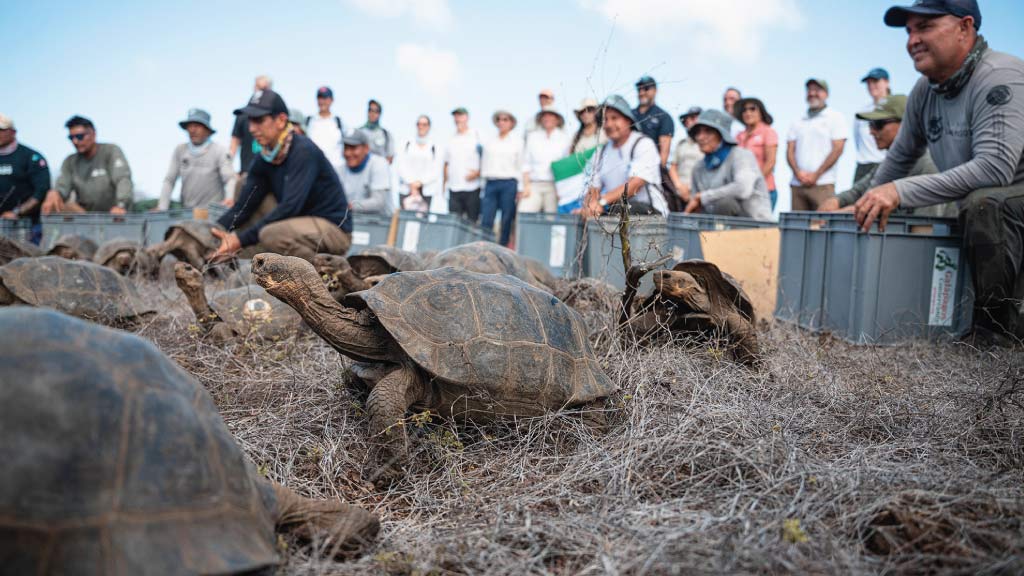
The big moment finally arrived in February 2026.
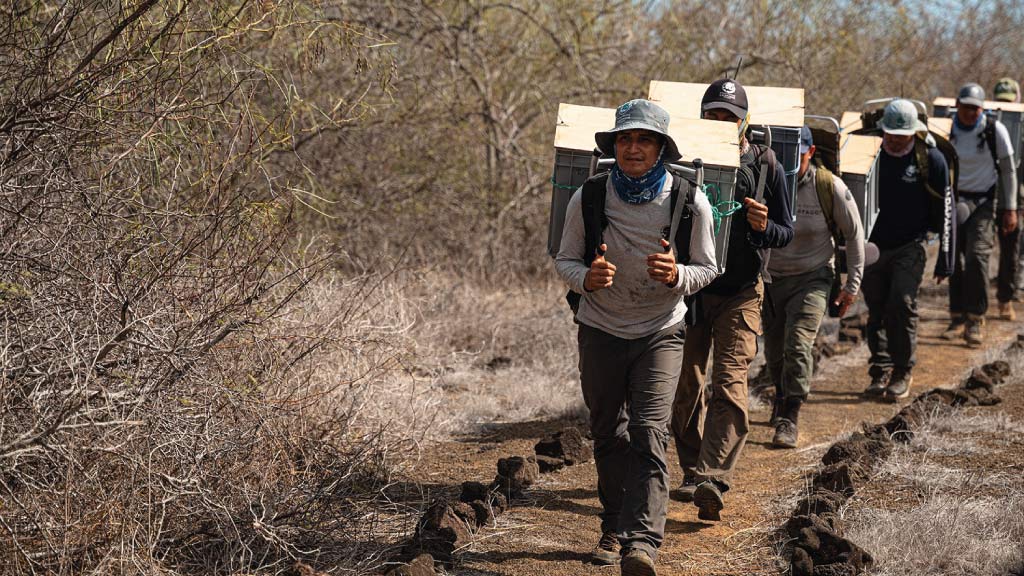
After more than 180 years of disappearance, 158 captive-bred giant tortoises were returned to Floreana Island.
These tortoises were between 12 & 14 years old, large enough to survive in the wild and withstand existing environmental pressures on their own.
The release was carefully planned during the Floreana rainy season, when vegetation and water are most abundant, to allow the easiest possible transition for the tortoises.
A lot more rests on their survival than just the future of the Floreana tortoise. Their reintroduction supports habitat and ecological processes across the island through grazing, trampling, and seed dispersal. Tortoises help to shape vegetation and maintain open habitats, which in turn benefits species of birds, insects, and other native wildlife.
The remarkable achievement of the Floreana Ecological Restoration Project was a joint effort between the Galápagos National Park Directorate, Jocotoco Foundation, Charles Darwin Foundation, and Galapagos Conservancy.

What does the future hold for the Floreana Giant Tortoise
The released population of Galapagos tortoises was fitted with lightweight GPS transmitters, helping scientists to carefully monitor and study their movements in the future.
This ensures that researchers can track and monitor their progress, as well as identifying any emerging risks to the population, so that they can intervene if required.
Future tortoise releases are also planned. The goal is to release tortoises across different areas of the island, supporting long-term ecological recovery.
Plans are also afoot to reintroduce twelve more locally extinct Floreana species over the coming years, including the Floreana mockingbird, Floreana racer snake, and little vermilion flycatcher.
This project represents the most ambitious island restoration effort ever undertaken in the Galapagos Islands, aiming to restore the natural balance of Floreana for future generations.

How to see Galapagos Tortoises?
Due to the strict protection and monitoring of the new tortoise population, it is unfortunately not possible for visitors to see the Floreana giant tortoises.
Tourists can, however, easily cross paths with Galapagos tortoises on other islands. Today, the Galapagos giant tortoise population size is estimated at between 15 and 20 thousand individuals, split over different islands.
The easiest way to see them is in captivity at tortoise breeding centers on Santa Cruz, Isabela, or San Cristobal islands. The most famous center is the Charles Darwin Research Station in Puerto Ayora. These centers play a vital role in tortoise conservation, protecting eggs and hatchlings from predation by introduced species like dogs, cats, pigs, and rats. Adult tortoises have no natural predators, so once the babies grow big enough, they are released into the wild. Visitors can see the complete tortoise life cycle in action – from incubating eggs, to tiny babies, energetic adolescents, and large adults who drive the breeding cycle.
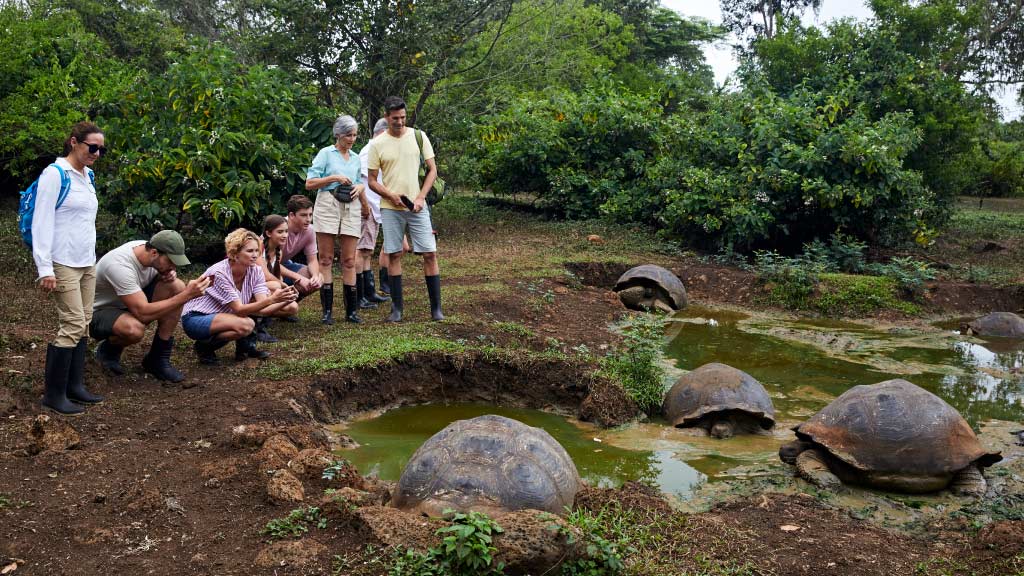
Visitors can also observe giant tortoises in their natural habitat. Highland ranches like El Chato on Santa Cruz and Galapaguera on San Cristobal are home to tortoise populations that roam freely in dense vegetation, with mud pools to cool off in.
When is the best time to see Galapagos tortoises? The good news is that they can be spotted all year round. In terms of behavior, mating season is usually in the dry season (June to November) in the highlands, while eggs are laid in the lowlands during the wet season (January to April).
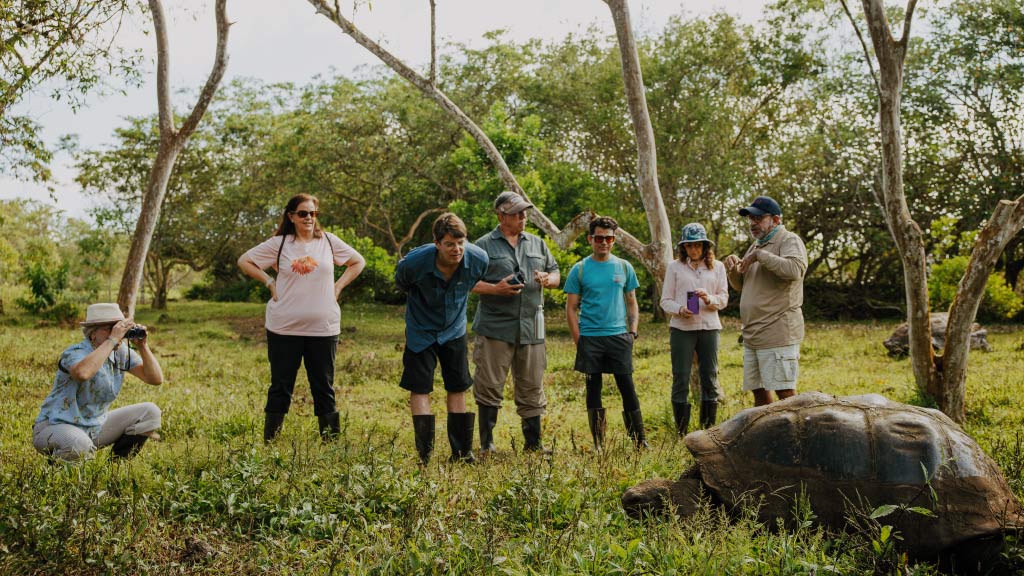
Whether you see tortoises at a breeding center or in the wild, you will be able to clearly observe the contrasting shell shapes between species. Of course, your naturalist guide will be happy to identify subspecies correctly for you and explain their adaptations in more detail.
For more information about Galapagos Tours and Galapagos cruises to see giant tortoises first hand (as well as many other fascinating bird and mammal species), contact a member of our team or call our toll-free numbers.
About the 15 Galapagos Giant Tortoise Species
In total, 15 different Galapagos giant tortoise species have been identified, all from the genus Chelonidis.
Each species population lived in a unique place from one another – either on different islands, or in the case of Isabela Island, populations were separated by unpassable lava flows. In general terms, the species fall into 3 types of Galapagos tortoise shell: Saddle-back, Dome, and Intermediate.
Today, 12 of the 15 species are still alive and well at the Galapagos Islands. These are native to: Española, Fernandina, Santa Cruz (2 species), Santiago, Pinzon, San Cristobal, and Isabela (5 species on each of Wolf, Darwin, Alcedo, Sierra Negra, and Cerro Azul volcanoes).
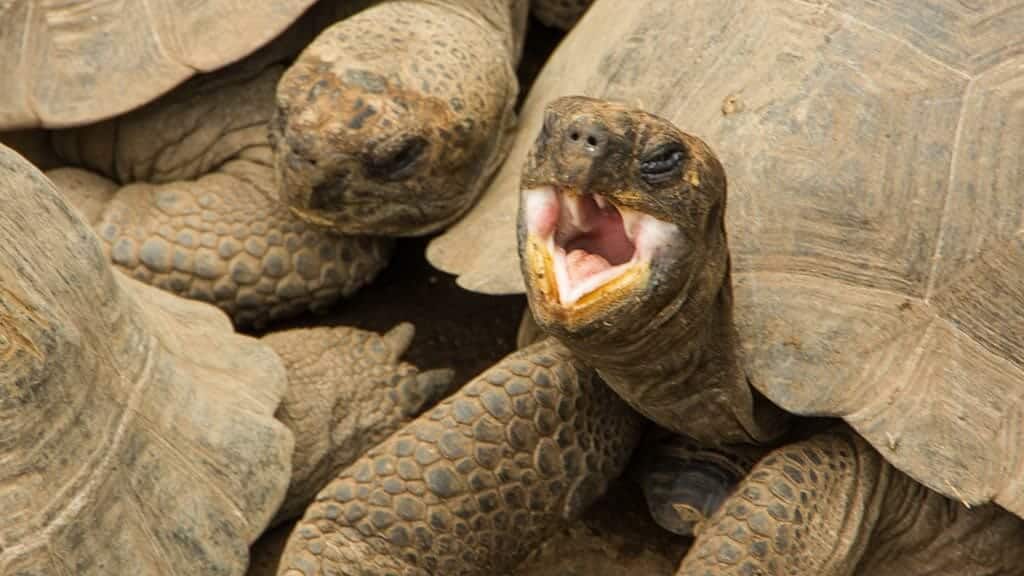
Then there is the newly released Floreana giant tortoise species.
That leaves 2 species that are extinct - those from Santa Fe and Pinta islands. Giant tortoises were long thought to be extinct on Fernandina, too, until a single female (named Fern) was discovered there in 2019.
This echoes the story of Lonesome George, the last surviving Pinta tortoise who was discovered all alone in 1971. The Galapagos Islands still hold many secrets, so the tortoise extinction list is perhaps not completely carved in stone.
If you enjoyed this post, why not read more about other iconic Galapagos species: Darwin’s Finches and Galapagos Mockingbirds. We’ve also published more general blogs about Galapagos birds & Galapagos animals.

In Conclusion, the repopulation of giant Galapagos tortoises to Floreana Island marks the success of one of the most ambitious conservation projects at the islands.
The hope is that the tortoises will thrive, help to restore Floreana’s habitat to its former glory, and, in turn, support other native plant, bird, and animal species there.
For sure, this story will continue for years to come, so keep your eyes peeled to conservation news for future updates.
Book With The #1 Trusted
Galapagos Travel Agency
